A machine learning approach to estimate the effectiveness of COVID-19 policies
Abstract
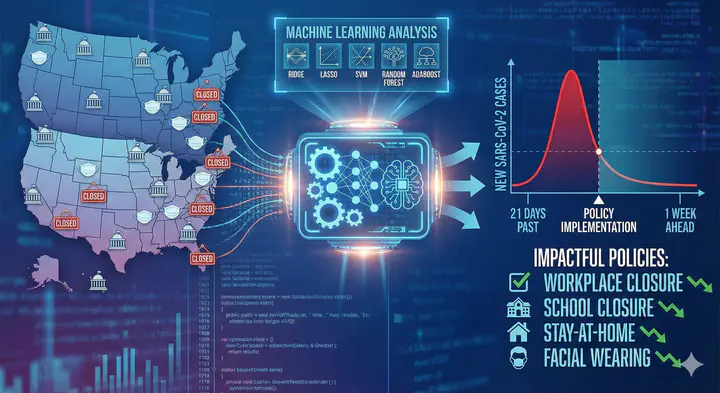
Since the emergence of severe acute respiratory syndrome coronavirus 2 (SARS-CoV-2), various policies have been implemented based on different governing bodies to control the spread of the virus; however, the question remains, how effective has each policy been in limiting case numbers? The answer to this question can help us understand how various policies have affected the pandemic and provide valuable insights to prepare for future pandemics. This study analyzes non-pharmaceutical intervention policies to measure their contribution to reducing the number of new cases in the United States. For this purpose, various machine learning techniques, including Ridge regression, Lasso regression, Support vector machining, Random Forest, and Adaboost, are employed to predict the number of new cases utilizing a window of past policy implementation records (21 days) to predict for one week ahead. A feature importance analysis is conducted at the end to evaluate the magnitude of importance of each policy. We observed that closure policies, including the workplace and school closure and stay-at-home requirements, are the most impactful policies, along with facial wearing.

Mohammad Fili
Postdoctoral Research Fellow
My research interests include Healthcare Data Analytics, Machine Learning, and Optimization.